LFP to participate in ZACC!

Prof Anna Nekaris and PhD candidate Johanna Rode will participate in this year’s ZACC conference (Zoos and Aquariums Committing to Conservation) to be held at Blank Park Iowa. As stated on the ZACC web site…

“Blank Park Zoo is excited to host the 2013 Zoos and Aquariums: Committing to Conservation conference in Des Moines, Iowa, July 8 through July 12, 2013.  This biennial conference provides opportunities for zoo and aquarium personnel and field researchers to meet and develop partnerships that benefit wildlife and wild places around the globe. The informal nature of the conference creates a positive atmosphere for networking and inspires collaborative action.”

With generous support by our wonderful colleagues at the Cleveland Metroparks Zoo and the Cleveland Zoo Society, Anna and Jo will travel to Iowa. We will present the first quantitative results of our conservation education and empowerment projects, participate in the ZACC film night, a round table on conservation action, and are excited to present some new LFP products at the ZACC market place. Not only will we sell our now classic glow-in-the dark tees, but we will also introduce our new line of Tereh and Bunga ‘Slow Loris Forest Protector’ products, including our gorgeous new children’s book, illustrated by Shelley Low.


Announcing New Edited Volume – Conservation and Ecology of Asian Slow Lorises

Prof Anna Nekaris will lead the editing of a new volume, on the Conservation and Ecology of Asian Slow Lorises as a special Theme Section issue of the international journal Endangered Species Research.The volume will appear in Summer 2013.

Slow lorises are an evolutionary distinct group of primates found in South and Southeast Asia. All are threatened with extinction not only due to habitat loss, but also due to their high prevalence in Asian traditional medicine, use as tourist photo props, and their high popularity as pets both nationally and internationally. Slow lorises have featured frequently recently in the international media largely due to this conservation crisis. For example, in 2007, they were the first primate since 1986 to be transferred to Appendix I of CITES. From 2009 onwards, they have been a regular feature in the global media as more and more popular media outlets discuss the legality of presence of illegal slow loris ‘pet’ videos on social networking sites.  Finally, the discovery of three new species in 2012 was instantly linked with the fact that these species are not only in sharp decline, meaning bad news for the new taxa, but also with the fact that the loris is the only venomous primate. The latter fact is just one of the many fascinating aspects of ecology within this unique evolutionary group of primates, whose feeding ecology, social behaviour, and even their distribution were not known even ten years ago. In this volume, contributors studying lorises throughout their range in India, Cambodia, Thailand, Borneo, Sumatra, Java, Singapore and Vietnam will bring together the first synthesis of the Conservation and Ecology of this fascinating group of species.

Some loris love for St Valentine’s!

So are they naughty little animals, hot-footing it from one partner to another? Are loris families torn apart by philandering fathers? No! Endearingly, early studies from the field show that the Javan loris presents a shining example of a healthy uni-male, uni-female family unit. And just in time for Valentine’s Day too, one of their favourite things to do together is spend time in the caliandra flowers sipping nectar—sweet!

Take Tereh, her man Guntur and little baby Tahini. They spend a lot of time together within a 100 m radius, with mum and baby snuggled together in the first few weeks of life and dad reassuringly close by. After that, unusual for primates, it is the man who takes over, with Guntur visiting baby Tahini throughout the night! Of course, we cannot be 100% sure that Gunter is Tahini’s father. Loris paternity tests are a long way down the pipe-line and are surpassed by more pressing concerns such as the components of loris venom! This isn’t Jeremy Kyle you know. That said, ladies have been known to let another man into their lives on occasion (just don’t tell Guntur).

Generally, loris mum, dad and kids live in stable social units or spatial groups. They spend their time allogrooming, following, expressing alternate click-calls and whistles and sleeping in close contact, with parents sharing the shopping responsibly by transferring information on food resources.

They are generally on good terms with the neighbours and interactions between members of overlapping spatial ranges are a genial affair with occasional grooming and whistling. But when there is a spat, look out—you could lose an ear! Other than those rows, we humans could take a gum-leaf from the loris book of manners!


Read the story also in our new newsletter here.

New Videos to Counteract YouTube Horrors – Slow Loris

For many of us, slow lorises are cute. You can put them in a pile of garbage and they still look just that!! CUTE! So it is no wonder that a tortured overweight loris on a dirty pile of sheets essentially being tortured still looks, well, cute (according to some 17 million viewers at any rate)…

For non-experts, who cannot read the expressions of fear in the animals’ faces when they watch videos of pet lorises, who cannot tell how much bright light hurts their eyes, who cannot see how starving they are so they eat bananas and rice rather than their beloved gum and insects, who cannot see how desperate they are for a branch so they grab on to an umbrella, they are still that – CUTE. For us here at the Little Fireface Project, we see the demise of a beloved species for a senseless human gain.

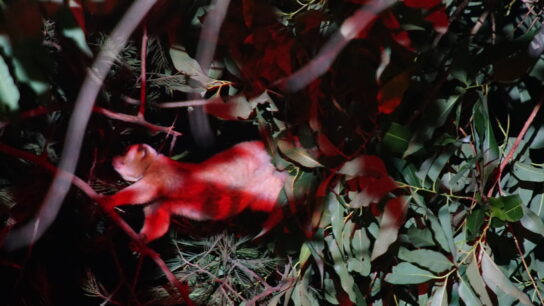
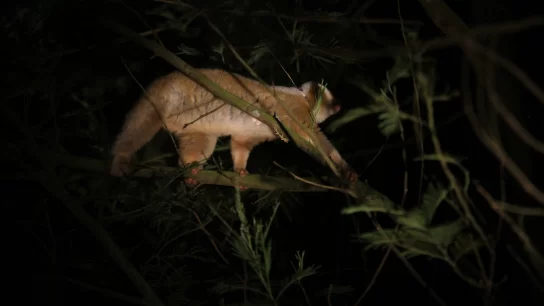
To counteract this, we are introducing a series of videos of these gorgeous animals as they should be. With our rare access to footage of animals in the wild, we hope you can see just how fast the loris can be! How much the move! How many branches they need! How giant their pupils should be. How lovely their fur should look. That is why we film in red and infrared light, so the loris can behave naturally, not terrified by white lights. We hope you can see, as we have done, the real loris, and love them for what they really are.

Experts gather to tackle slow loris trade – Press Release

Sukabumi – last week over 50 people from government agencies, national and international universities, NGOs and rescue centres met in the Cikananga Wildlife Rescue Centre on Java, Indonesia, to discuss the challenges in tackling wildlife trade in Indonesia. Different from other such workshops the focus was on some of the lesser known nocturnal species with a particular emphasis on slow lorises.

Slow lorises are a group of small nocturnal primates that are particularly heavily affected by the illegal pet trade. They occur all over Southeast Asia from India and China south to Indonesia and the Philippines.  Indonesia is home to six of the eight species including the recently described Kayan slow loris.

Anna Nekaris, professor in primate conservation at Oxford Brookes University, who described the new Kayan slow loris, presented the results of her research highlighting the differences between the species. This allows workshop participants to identify the different species they encounter in their day-to-day jobs. She remarked that “the increased diversity that is recognised amongst nocturnal mammals such as the slow lorises make it paramount that law enforcement agencies are able to identify the different species. With increased species numbers it furthermore highlights the need for increased protection of these sometimes overlooked animals”.

The participants were presented with data on the trade in civets, tarsiers, slow lorises and other wildlife demonstrating the global significance of Indonesia of the trade in these species. This resulted in frank discussions about the challenges the Indonesian government faces when confronted with large scale open trade in protected species. The participant then had the opportunity to view a great number of confiscated animals in the rescue centre. Several then went on to survey the animal markets in Jakarta observing no less than 31 slow lorises offered openly for sale.

Dr Chris Shepherd, deputy director of Traffic Southeast Asia was one of the speakers, and remarked how slow loris trade is actually worsening.

At the end of the workshop it was concluded that there was a clear need for a Southeast Asian wide slow loris conservation action plan as well as an increased understanding of the forces behind the open trade in protected wildlife at more regional scales.

Prof Nekaris concluded “It is inspiring to see that the conservation crises that the faces the slow loris brought together participants from different countries and varying backgrounds to safe an animal that has previously been considered insignificant.”


Note to editors:

Slow lorises (genus Nycticebus) are a group of 8 nocturnal primates that are threatened by habitat destruction and increasingly by trade – they feature frequently in YouTube videos. Slow lorises are protected in all of the 13 range countries in which they occur and are included on Appendix I of the Convention of International Trade in Endangered Species of Wild Fauna and Flora, precluding all international trade.


A film showing the nature of the wildlife trade in Indonesia can be seen here


Workshop Proyek Muka Geni: Perlindungan, Perdagangan, dan Pemberdayaan

From the 14th to the 16th January, the Little Fireface Project will hold a first in a series of 2013 workshops to help stop the wildlife trade in slow lorises. The event will be held at the Cikananga Wildlife Rescue Centre near Sukabumi, West Java in association with PPSC and TRAFFIC. Ultimate aims of the workshop include the first working group in Indonesia to work together to help enforce wildlife trafficking laws for slow loris, to help design a campaign to discourage keeping lorises as pets, and to improve captive care and release protocols for slow lorises.

Loris Sparkle for the Holiday Season

Thanks to you all for your generosity in helping us at the Little Fireface Project and making our first year as an official project so amazing. We have had songs, poems, logos, children’s books, posters, photographs, passion and time donated to help us help to save the slow loris! As a tiny token of thanks for those of you celebrating the December holidays, here are some cute little gift tags and ornaments you can download to help spread a bit more loris awareness.

Frontier Earth and the Jungle Gremlins

Java’s jungle gremlins will feature as second in the series of Animal Planet’s landmark series Frontier Earth Presented by Walmart, with series presenter, carnivore expert Dave Salmoni.We will live tweet during the film, #frontierearth, #junglegremlin, #slowloris.

If you were inspired by what you saw in the film, and want to do more, please visit our Help the Loris pages, donate to our project from North America via the fantastic International Primate Protection League, or directly to our UK-based slow loris fund,  visit the slow lorises at one of the zoos in North America supporting the Little Fireface Project and Anna’s work – these are Cleveland Metroparks Zoo, Columbus Zoo, and the Brookfield Zoo, sign our petition to help close down the markets you saw in the film, join us on Facebook, or @queenfireface on Twitter. Please help us to save Asia’s Jungle Gremlins!


ABC Nightline Highlights Illegal Loris Pet Trade

On the 16th of November 3.5 million North American viewers learned the truth that slow lorises featured in illegal YouTube videos just are not as cute as they seem. Thanks to a provocative piece featured on ABC’s Nightline with correspondent Jeffrey Kofman, filmed with the kind collaboration of the mammal staff of the UK Paignton Zoo, viewers saw that lorises simply are not cuddly pets.

Like many other videos, ‘Slow loris eating sticky rice’ went viral earlier this year. With claims that their pet was ‘domesticated,’ ‘bought in a pet shop,’ and ‘was okay because she did not have her teeth ripped out,’ the situation was made worse when the video was advocated by top market sources such as the Washington Post and CNN, who urged viewers to watch the ‘cute’ video as ‘relief’ from the grief wrought by Superstorm Sandy.

Unbeknownst to these viewers, however, is that each click contributes to a cruel trade. NO slow loris is domestic. In order for a loris to be sold legally to a pet shop, it or its parents must be legally imported into the selling country to be specifically bred as pets. This is not the case for ‘Kinako,’ meaning she is illegal (we could not find any case of lorises from Sumatra legally imported into Japan for commercial breeding). The photos above, from WCS Sumatra,  show the supply trade for lorises like Kinako (a Sumatran slow loris) and how they ultimately get to Japanese pet shops – it is a horrifying story to say the least. Luckily Kinako DOES have teeth, but this is rare. Unfortunately her owner knows nothing about how to care for a loris. She is kept in a brightly lit room, that hurts her eyes. She is kept in a cage with no branches, which is why she clings to a fork, and eating rice will ultimately kill her. It is certainly not a cute video.

Thanks so much to ABC for trying to counteract the damage of organisations like YouTube, CNN and the Washington Post. We urge to leave comments on the CNN video; the Washington Post has already closed comments to their site. YouTube itself still refuses to comment on why they allow illegal loris videos to continue. And thanks to Paignton Zoo‘s pygmy slow loris Josh for being so formidable and growling throughout the entire interview! He was not going to show ANYONE that he was cute and cuddle!

Please sign our petition to help stop the illegal wildlife trade in Indonesia and visit our Help the Loris Pages to see how you can help!


Animal Market Horrors

During monthly market surveys, the Little Fireface Project team monitors wildlife trade in some of Indonesia’s most notorious illegal markets, in the hopes that things will get better, and those breaking the law will be prosecuted. Sadly, the number of lorises we see for sale just is not decreasing. Indonesia has some of the best laws in Asia to protect their wildlife but sadly, as these photos in a public market show, they are not always enforced.

Part of our programme is thus also to work with international organisations like TRAFFIC to provide training materials so that enforcement officers can be sure they can identify the species that are being traded, so there is no doubt which are protected. Of course, the animal welfare issues of the unprotected species is also abysmal and is an issue in its own right, as the photographs of the baby monkeys show.

Please sign our petition to help end this cruel and crushing trade.