Photo props – the unknown loris threat

A few months back I met Mark Mason, who has been working relentlessly to build a new set of enclosures to house slow lorises confiscated from the Thai photo prop trade on Phuket island. A former MSc student of mine, Petra Osterberg, working with the Gibbon Rehabilitation Project, has been doing the same, and in fact, a large proportion of LFP adoption funds went to fund a cage she built for confiscated lorises.

But where are all these lorises coming from? And why is it so bad that  they are being carried around the beaches of Thailand? Does it hurt them to have some innocent photos taken? Isn’t it a nice experience for a tourist to hold a cute animal?

You think we should have learned from our experiences in the past – the beaches of Spain for instance, where chimpanzees were exploited for a similar trade. No matter how cute the wild animal is, it is that…a wild animal. These poor lorises are ripped from their nocturnal forest homes, dazzled by the very loud noises of the bustling streets. Even many people do not like to be out in the town of Patong at night, with bright lights, loud music and even louder tourists. For a slow loris, whose quiet life in the dark forest, it must be horrific, and it can be seen on the faces of these animals, as camera flash after camera flash sees them recoil in typical fear postures. Lorises too need to hold branches to feel secure, and holding on to a person, while dressed in a clown’s costume, is not security – it is no wonder they grasp for the slender neck of a beer bottle when it is offered.

Lorises naturally look passive and ‘cute’ when terrified. They do not necessarily need to be drugged, though some are. But most do have their teeth cut out. These teeth are vital for grooming and gouging gum, their most important food source, so these lorises cannot be returned to the wild. On top of that, most cannot survive for more than a few months in captivity on a diet of fruit and paraded in such stressful conditions, so need to be replaced with another wild loris.  So the lorises that Mark and Petra are rescuing are in a halfway house – we don’t know where they should go. But we do know that every time a tourist takes a picture with a slow loris laughs and holds it with their friends, they encourage this cruel trade. So PLEASE do not support the photo prop trade.

Take a moment to see that these lorises can have a better life. Thanks to Mark and Petra for their work in giving some of them a second chance. These photos are by Mark Mason.


LFP to participate in ZACC!

Prof Anna Nekaris and PhD candidate Johanna Rode will participate in this year’s ZACC conference (Zoos and Aquariums Committing to Conservation) to be held at Blank Park Iowa. As stated on the ZACC web site…

“Blank Park Zoo is excited to host the 2013 Zoos and Aquariums: Committing to Conservation conference in Des Moines, Iowa, July 8 through July 12, 2013.  This biennial conference provides opportunities for zoo and aquarium personnel and field researchers to meet and develop partnerships that benefit wildlife and wild places around the globe. The informal nature of the conference creates a positive atmosphere for networking and inspires collaborative action.”

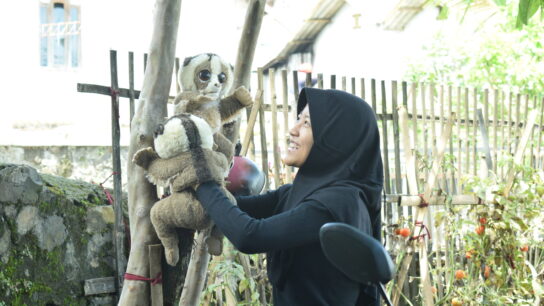
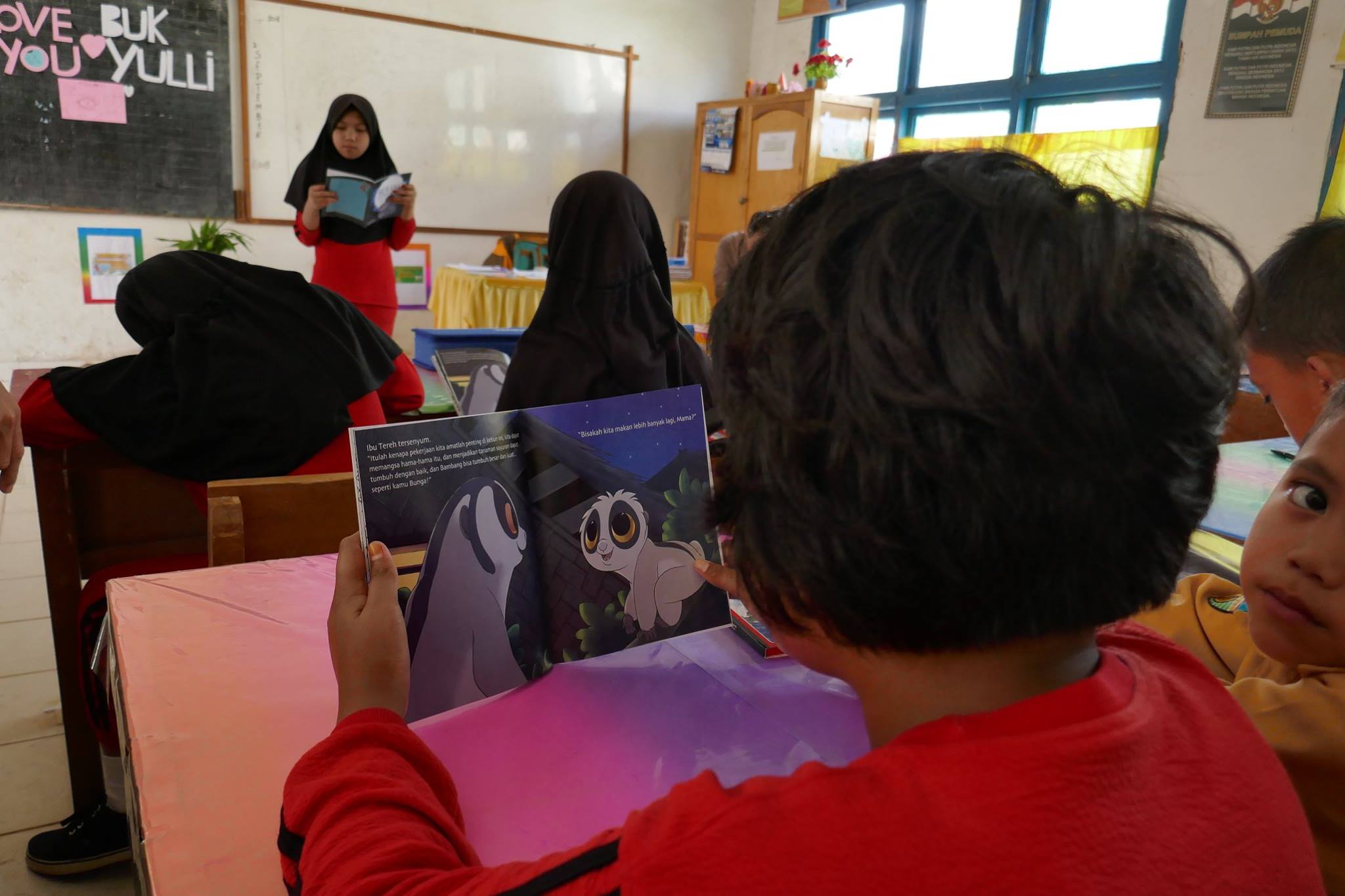
With generous support by our wonderful colleagues at the Cleveland Metroparks Zoo and the Cleveland Zoo Society, Anna and Jo will travel to Iowa. We will present the first quantitative results of our conservation education and empowerment projects, participate in the ZACC film night, a round table on conservation action, and are excited to present some new LFP products at the ZACC market place. Not only will we sell our now classic glow-in-the dark tees, but we will also introduce our new line of Tereh and Bunga ‘Slow Loris Forest Protector’ products, including our gorgeous new children’s book, illustrated by Shelley Low.


New Videos to Counteract YouTube Horrors – Slow Loris

For many of us, slow lorises are cute. You can put them in a pile of garbage and they still look just that!! CUTE! So it is no wonder that a tortured overweight loris on a dirty pile of sheets essentially being tortured still looks, well, cute (according to some 17 million viewers at any rate)…

For non-experts, who cannot read the expressions of fear in the animals’ faces when they watch videos of pet lorises, who cannot tell how much bright light hurts their eyes, who cannot see how starving they are so they eat bananas and rice rather than their beloved gum and insects, who cannot see how desperate they are for a branch so they grab on to an umbrella, they are still that – CUTE. For us here at the Little Fireface Project, we see the demise of a beloved species for a senseless human gain.

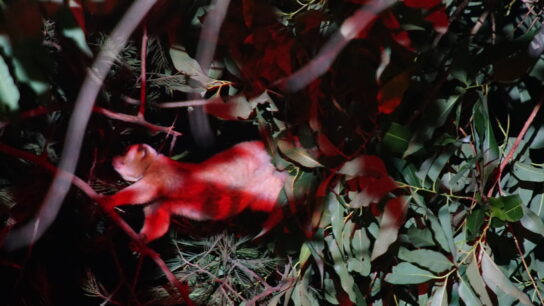
To counteract this, we are introducing a series of videos of these gorgeous animals as they should be. With our rare access to footage of animals in the wild, we hope you can see just how fast the loris can be! How much the move! How many branches they need! How giant their pupils should be. How lovely their fur should look. That is why we film in red and infrared light, so the loris can behave naturally, not terrified by white lights. We hope you can see, as we have done, the real loris, and love them for what they really are.

Experts gather to tackle slow loris trade – Press Release

Sukabumi – last week over 50 people from government agencies, national and international universities, NGOs and rescue centres met in the Cikananga Wildlife Rescue Centre on Java, Indonesia, to discuss the challenges in tackling wildlife trade in Indonesia. Different from other such workshops the focus was on some of the lesser known nocturnal species with a particular emphasis on slow lorises.

Slow lorises are a group of small nocturnal primates that are particularly heavily affected by the illegal pet trade. They occur all over Southeast Asia from India and China south to Indonesia and the Philippines.  Indonesia is home to six of the eight species including the recently described Kayan slow loris.

Anna Nekaris, professor in primate conservation at Oxford Brookes University, who described the new Kayan slow loris, presented the results of her research highlighting the differences between the species. This allows workshop participants to identify the different species they encounter in their day-to-day jobs. She remarked that “the increased diversity that is recognised amongst nocturnal mammals such as the slow lorises make it paramount that law enforcement agencies are able to identify the different species. With increased species numbers it furthermore highlights the need for increased protection of these sometimes overlooked animals”.

The participants were presented with data on the trade in civets, tarsiers, slow lorises and other wildlife demonstrating the global significance of Indonesia of the trade in these species. This resulted in frank discussions about the challenges the Indonesian government faces when confronted with large scale open trade in protected species. The participant then had the opportunity to view a great number of confiscated animals in the rescue centre. Several then went on to survey the animal markets in Jakarta observing no less than 31 slow lorises offered openly for sale.

Dr Chris Shepherd, deputy director of Traffic Southeast Asia was one of the speakers, and remarked how slow loris trade is actually worsening.

At the end of the workshop it was concluded that there was a clear need for a Southeast Asian wide slow loris conservation action plan as well as an increased understanding of the forces behind the open trade in protected wildlife at more regional scales.

Prof Nekaris concluded “It is inspiring to see that the conservation crises that the faces the slow loris brought together participants from different countries and varying backgrounds to safe an animal that has previously been considered insignificant.”


Note to editors:

Slow lorises (genus Nycticebus) are a group of 8 nocturnal primates that are threatened by habitat destruction and increasingly by trade – they feature frequently in YouTube videos. Slow lorises are protected in all of the 13 range countries in which they occur and are included on Appendix I of the Convention of International Trade in Endangered Species of Wild Fauna and Flora, precluding all international trade.


A film showing the nature of the wildlife trade in Indonesia can be seen here


Workshop Proyek Muka Geni: Perlindungan, Perdagangan, dan Pemberdayaan

From the 14th to the 16th January, the Little Fireface Project will hold a first in a series of 2013 workshops to help stop the wildlife trade in slow lorises. The event will be held at the Cikananga Wildlife Rescue Centre near Sukabumi, West Java in association with PPSC and TRAFFIC. Ultimate aims of the workshop include the first working group in Indonesia to work together to help enforce wildlife trafficking laws for slow loris, to help design a campaign to discourage keeping lorises as pets, and to improve captive care and release protocols for slow lorises.

Slow Loris Conservation Awards: Journalism and Sports

Our Wednesday the 19th awards go to two special recipients.

Loris Conservation Action: John Platt

For Loris Conservation Action, we applaud John Platt a journalist covering environmental issues, who wrote one of the most widely read conservation articles for Scientific American about slow loris on the net! We still wonder aloud with John – do YouTube videos increase awareness or do they spur on the illegal pet trade? The statistics tell us BOTH.


Loris Conservation Awareness: Loris Capirossi

We have always felt that the fastest loris in the world should be introduced to the slowest loris in the world and we really hope that speedy Loris reads this post and likes the loris version of himself! Although he is now retired, imagine if Mr Capirossi were to do a charity race with a little slow loris emblem on his bike! What awareness that would raise!

Loris Fact 5: Communication and Collaboration to Save Lorises!

This post is a not so much a fact but a story from the field from our research fellow Sisil Putri.The FACT is that we cannot save lorises without the love and passion of people. We are the stewards of all the world’s animals and our own actions can affect the lorises. What we buy, what we eat, but of course the daily actions of those who live with them also impact the lorises on a day-to-day and very personal basis. Sisil describes how the Little Fireface Project is slowly working in a grassroots way to save one of the last remaining and largest known population of Javan slow lorises.


By Sisil Putri, Little Fireface Research Fellow

This month Salamandar Field Centre had students visit from IPB (Bogor Agriculture Institute). They coincidentally had practical work (KKN-Kuliah Kerja Nyata) near the village where the Little Fireface Project is happening and heard about it from the socialisation day that we conducted in the village office. A few days before they finished their practical work, they asked if they could help out come with my observations in the night, curious to see the animal that I kept taking about throughout their stay in the area.

After seeing the ‘little firefaces,’ we held a little discussion of their personal opinion about the lorises amongst the local people working in the field plantations. Ajeng (with the purple gloves) came to my observations 3 times and had a really interesting point of view.  As a student from komunikasi pengembangan masyarakat discipline (communication in society development) she suggested that we expand socialization to other villages as she was facinated by the lorises she saw. She thought it was such a shame if the village people did not know that they have to protect them or did not have the knowledge to be proud of possessing the stewardship for this adorable night creature in their hometown. Another student, Hadi who had the opportunity to observe a kukang foraging and feeding, also agreed with Ajeng as he thinks that kukang is not a potential pest for local people’s plantation. He felt slow lorises do nothing to harm the plantation, and even felt that kukang might help to reduce the insects in the plantation as we saw a number of kukang eats insects! It was a really interesting time to have them (2 students a night for 3 nights) and to hear what point of views other students from different intellectual disciplines’ held about our study animals and to discuss what potential act each discipline could do to help the conservation of this endemic primate of Java.

Apart from students’ short sighting of slow loris, two of my junior freshmen also came again to the field centre to help me taking habitat survey data from 16th-21st of August 2012 as all of our tracker have the Idul fitri holidays. During 5 days visit, Marsya and Ardian took the chance to learn how to take morphometric data of slow lorises, and have a short lecture from our PhD student, Jo about the different methods that can be used for behavioral study.  We also spotted two eagle soaring above us while we did habitat surveys and captured some photos.

Jo, me and the two students then visited our guide’s house celebrate idul fitri as it was a very important day for our guides. We were served lots of food in their house and had a chance to meet their family.

Loris Fact 3: I wanna hold your hand! Loris hands and feet…

Loris Awareness Week Fact 3:

The anatomy: Like all primates, lorises have grasping hands and feet…to an extreme. To put it anatomically, the hands and feet have a thumb and big toe that can be adducted (moved away from) 180o from the other digits allowing them to hold on to branches and prey tightly. This is made possible by a second digit extraordinarily reduced in length that allows for a pincer like grasp…

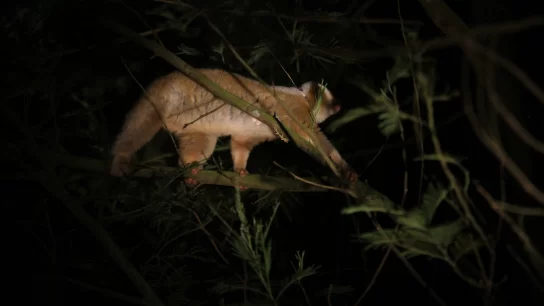
The behaviour: So if you see a loris in the forest or in a zoo, they are always holding on! In the forest, a loris rarely holds on to one branch. Sometimes they hold on to bundles as the slither along. Their very mobile joints allow one leg above their head, one out to the side, and a an arm somewhere else, as they comically race around their three dimensional branch filled world. The human observer can wonder how they squeeze amongst all those branches and bamboos. When they are on a single branch, they feel less secure, belly pressed close for balance and they race across, like the picture of the animal on the hose pipe above! In zoos, where fewer supports may be offered, lorises may too often cling to wire mesh, which offer the supports they crave. In animal markets, where the wire mesh is just chicken wire, it cuts into their delicate hands and causes severe injury.

Understanding YouTube lorises: Basically, lorises MUST grasp or they get super stressed. They can’t leap, so they actually hold on for dear life. So when a loris reaches out for an umbrella, he is grasping for his life. When a loris holds onto a fork, he is just wishing it were a branch. When a loris holds a finger, it is the same reaction. It is not cute!

Advice for captive management: Lorises use all levels of the forest. At LFP, we have studied all species so far in the wild. They zigzag up and down, up and down. In zoos, sometimes no supports are offered at the floor level, or too few supports are offered. We understand that keepers need to be able to get inside! But somehow providing more connectivity to lorises to keep them off the wire mesh, providing dense connectivity,and supports around which they can grasp is vital.

Loris Fact 1: Seeing in the dark!

Until slow loris awareness week, we shall now bring you slow loris facts of the day! Today we discuss the big beautiful eyes of lorises and welfare issues for tourists.

Bengal slow loris by Nabajit Das

Picture 1 of 5

Fun fact! All species of loris and potto have a tapetum lucidum, a layer of light reflecting tissue behind the retina, that produces ‘eyeshine’ (See images). They have amongst the largest eyes of the primates, and amongst the most forward facing eyes. They can see their world in almost total darkness. The pupils become huge allowing them to see! Want some science? Read more!

Comparative morphology of the eye in primates

Eye Size at Birth in Prosimian Primates: Life History Correlates and Growth Patterns

A re-evaluation of the role of vision for the activity rhythms of nocturnal primates

Foraging behaviour of the slender loris: implications for theories of primate origins.

Pet Lorises: One of the worse reasons to keep a loris as a pet is because they are nocturnal. They only come out at night. In the wild, a loris will only move in the daytime if threatened by a predator or poacher.Terrified YouTube lorises with tiny pupils in bright light really struggle. Being kept awake all day, and always having to see  world in daylight, upsets their circadian rhythms. The stress ‘forced diurnality’ causes would be one factor ultimately leading to death.

What can you do?? In our studies, we us see red lights that lorises cannot see (see article 3). If you want to watch any nocturnal animals at night, please use a red filter/gel/ bezl such as those available from Petzl or CluLite and never watch an nocturnal animal with an LED blue torch as this can cause damage to their eyes. If we photograph them we use red lights, infrared lights, and 1/200th of a second flash. Tourists: only ONE person should photograph a loris; never a group with many small flashes. This is pretty terrifying! If the loris shows signs of stress, freezing, blinking, running away, stop photos immediately.

Slow Loris Story Writing Competition

Attention!! Young Loris Lovers!

Gigi, our cuddly mascot is excited to announce her first slow loris story writing competition. As part of Loris Awareness Week, Gigi would like to receive stories about lorises written in English by children.The stories can be about conservation, about ecology, or just fantasy and fun! Just to increase awareness about lorises and for us to see how you see these special creatures.

The winner’s story will be translated to Bahasa Indonesian and shared with our local school children in Cipaganti. At the same time, our Cipaganti children will also write a loris story, and that child’s story will be translated to English. Both stories will feature in the next Little Fireface Project newsletter. This is part of our Connecting Classrooms programme.

Send your story to littlefireface@gmail.com by 19 September. Don’t forget to include your name, age and contact details. The winner will also receive a winner’s pack, including a certificate.