Prof Nekaris Awarded Virginia McKenna Compassionate Conservation Award

Slow Loris Champion Wins 2nd Virginia McKenna Award for Compassionate Conservation

Anna Nekaris & Virginia McKenna

Anna Nekaris & Virginia McKenna

Anna Nekaris presenting Virginia McKenna with the first mock-up of the children's book Slow Loris Forest Protector

Anna Nekaris presenting Virginia McKenna with the first mock-up of the children’s book Slow Loris Forest Protector

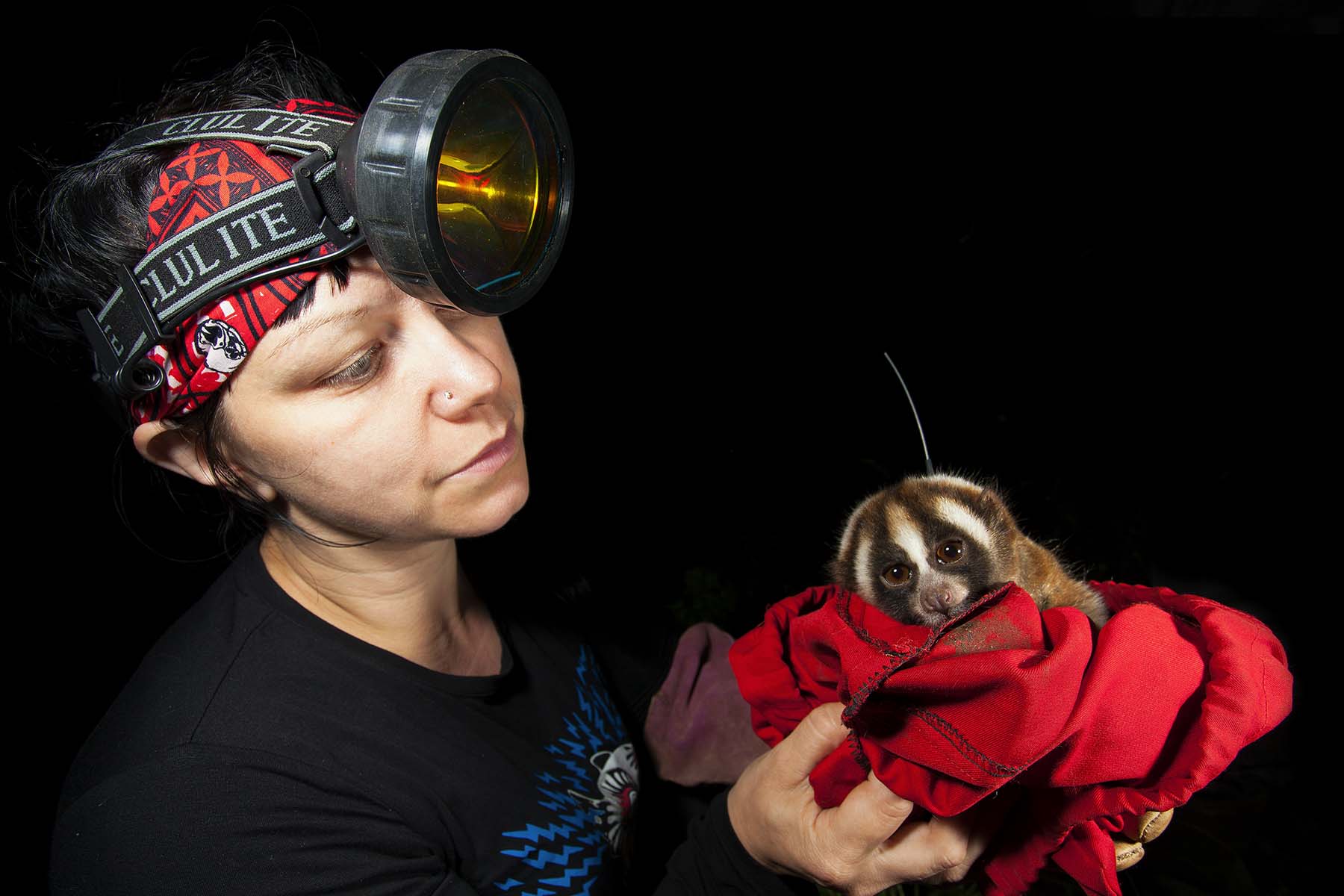
We are delighted to announce that Professor Anna Nekaris of Oxford Brookes University and the Little Fireface Project (www.nocturama.org) has been awarded the 2nd Virginia McKenna Award for Compassionate Conservation.

Prof. Nekaris was selected to receive the award for her work in exposing the cruel and destructive trade in slow lorises as pets in South East Asia, and for raising awareness of the plight of these secretive and fascinating animals through academia, the media and field work.

The Little Fireface Project (LFP) began officially in December 2011, building on work carried out by the Nocturnal Primate Research Group at Oxford Brookes since 1993. In response to a burgeoning demand for illegally traded wild slow lorises as pets, fuelled by YouTube videos, LFP launched a formal programme to halt this trade. The Project initiated the first long-term field study of Javan slow lorises, providing vital data to rescue centres to improve success of reintroduction of ex-pet trade victims. It provides training materials and workshops on taxonomy, helping to reduce reintroduction of non-native loris species; conducts market surveys and reports illegal loris sales to authorities; operates a community-based conservation project in Garut, with conservation education and training schemes for trackers, enforcement officers and students; provides alternative incomes to villagers producing loris handicrafts; and actively uses social media to promote its activities, resulting in the removal of the ‘notorious’ Tickling Slow Loris video from wired.com in 2012.

Virginia McKenna OBE, founder of the Born Free Foundation, who met with Prof. Nekaris in Oxford to present the Award, said “I am so delighted that Anna has won this award. I think her work has brought international attention to this little-understood species and her commitment to the individuals she encounters is exactly what Compassionate Conservation is all about. “

The award, sponsored by the Born Free Foundation, is intended to provide support and recognition for researchers, practitioners, organisations and projects that promote and develop the consideration of animal welfare in conservation practice.

Prof. Nekaris intends to use the Award funding to produce an information book in Bahasa Indonesia to educate and empower local people to save slow lorises.

The Born Free Foundation has, at its heart, the interface between animal welfare and conservation, and is keen to promote its agenda of Compassionate Conservation, where the welfare of individual animals is a central consideration in conservation actions. To find out more, go to  www.compassionateconservation.org

Photo props – the unknown loris threat

A few months back I met Mark Mason, who has been working relentlessly to build a new set of enclosures to house slow lorises confiscated from the Thai photo prop trade on Phuket island. A former MSc student of mine, Petra Osterberg, working with the Gibbon Rehabilitation Project, has been doing the same, and in fact, a large proportion of LFP adoption funds went to fund a cage she built for confiscated lorises.

But where are all these lorises coming from? And why is it so bad that  they are being carried around the beaches of Thailand? Does it hurt them to have some innocent photos taken? Isn’t it a nice experience for a tourist to hold a cute animal?

You think we should have learned from our experiences in the past – the beaches of Spain for instance, where chimpanzees were exploited for a similar trade. No matter how cute the wild animal is, it is that…a wild animal. These poor lorises are ripped from their nocturnal forest homes, dazzled by the very loud noises of the bustling streets. Even many people do not like to be out in the town of Patong at night, with bright lights, loud music and even louder tourists. For a slow loris, whose quiet life in the dark forest, it must be horrific, and it can be seen on the faces of these animals, as camera flash after camera flash sees them recoil in typical fear postures. Lorises too need to hold branches to feel secure, and holding on to a person, while dressed in a clown’s costume, is not security – it is no wonder they grasp for the slender neck of a beer bottle when it is offered.

Lorises naturally look passive and ‘cute’ when terrified. They do not necessarily need to be drugged, though some are. But most do have their teeth cut out. These teeth are vital for grooming and gouging gum, their most important food source, so these lorises cannot be returned to the wild. On top of that, most cannot survive for more than a few months in captivity on a diet of fruit and paraded in such stressful conditions, so need to be replaced with another wild loris.  So the lorises that Mark and Petra are rescuing are in a halfway house – we don’t know where they should go. But we do know that every time a tourist takes a picture with a slow loris laughs and holds it with their friends, they encourage this cruel trade. So PLEASE do not support the photo prop trade.

Take a moment to see that these lorises can have a better life. Thanks to Mark and Petra for their work in giving some of them a second chance. These photos are by Mark Mason.


Emergency Guide for Rescuing Slow Lorises

It seems more people have acquired a loris than ever before. The illegal trade in these endangered primates is on the increase. Many people buy a loris thinking they are helping it, or not even knowing what it is. We have created this leaflet to help such people in Indonesia. An Indonesian version will also be available. We will also make leaflets for other countries too, but this is a start.

Loris Pet Leaflet

New Videos to Counteract YouTube Horrors – Slow Loris

For many of us, slow lorises are cute. You can put them in a pile of garbage and they still look just that!! CUTE! So it is no wonder that a tortured overweight loris on a dirty pile of sheets essentially being tortured still looks, well, cute (according to some 17 million viewers at any rate)…

For non-experts, who cannot read the expressions of fear in the animals’ faces when they watch videos of pet lorises, who cannot tell how much bright light hurts their eyes, who cannot see how starving they are so they eat bananas and rice rather than their beloved gum and insects, who cannot see how desperate they are for a branch so they grab on to an umbrella, they are still that – CUTE. For us here at the Little Fireface Project, we see the demise of a beloved species for a senseless human gain.

To counteract this, we are introducing a series of videos of these gorgeous animals as they should be. With our rare access to footage of animals in the wild, we hope you can see just how fast the loris can be! How much the move! How many branches they need! How giant their pupils should be. How lovely their fur should look. That is why we film in red and infrared light, so the loris can behave naturally, not terrified by white lights. We hope you can see, as we have done, the real loris, and love them for what they really are.

Experts gather to tackle slow loris trade – Press Release

Sukabumi – last week over 50 people from government agencies, national and international universities, NGOs and rescue centres met in the Cikananga Wildlife Rescue Centre on Java, Indonesia, to discuss the challenges in tackling wildlife trade in Indonesia. Different from other such workshops the focus was on some of the lesser known nocturnal species with a particular emphasis on slow lorises.

Slow lorises are a group of small nocturnal primates that are particularly heavily affected by the illegal pet trade. They occur all over Southeast Asia from India and China south to Indonesia and the Philippines.  Indonesia is home to six of the eight species including the recently described Kayan slow loris.

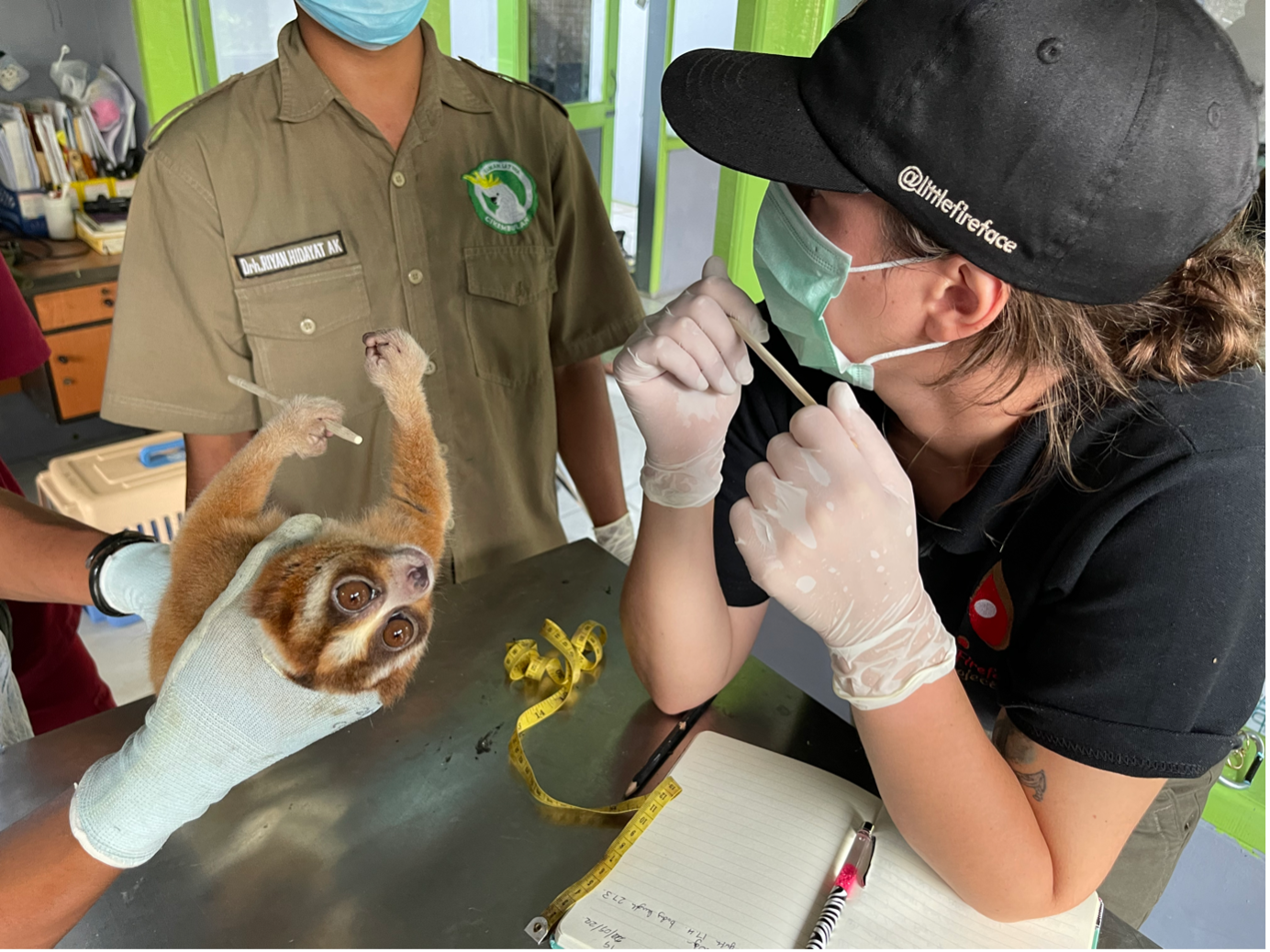
Anna Nekaris, professor in primate conservation at Oxford Brookes University, who described the new Kayan slow loris, presented the results of her research highlighting the differences between the species. This allows workshop participants to identify the different species they encounter in their day-to-day jobs. She remarked that “the increased diversity that is recognised amongst nocturnal mammals such as the slow lorises make it paramount that law enforcement agencies are able to identify the different species. With increased species numbers it furthermore highlights the need for increased protection of these sometimes overlooked animals”.

The participants were presented with data on the trade in civets, tarsiers, slow lorises and other wildlife demonstrating the global significance of Indonesia of the trade in these species. This resulted in frank discussions about the challenges the Indonesian government faces when confronted with large scale open trade in protected species. The participant then had the opportunity to view a great number of confiscated animals in the rescue centre. Several then went on to survey the animal markets in Jakarta observing no less than 31 slow lorises offered openly for sale.

Dr Chris Shepherd, deputy director of Traffic Southeast Asia was one of the speakers, and remarked how slow loris trade is actually worsening.

At the end of the workshop it was concluded that there was a clear need for a Southeast Asian wide slow loris conservation action plan as well as an increased understanding of the forces behind the open trade in protected wildlife at more regional scales.

Prof Nekaris concluded “It is inspiring to see that the conservation crises that the faces the slow loris brought together participants from different countries and varying backgrounds to safe an animal that has previously been considered insignificant.”


Note to editors:

Slow lorises (genus Nycticebus) are a group of 8 nocturnal primates that are threatened by habitat destruction and increasingly by trade – they feature frequently in YouTube videos. Slow lorises are protected in all of the 13 range countries in which they occur and are included on Appendix I of the Convention of International Trade in Endangered Species of Wild Fauna and Flora, precluding all international trade.


A film showing the nature of the wildlife trade in Indonesia can be seen here


Workshop Proyek Muka Geni: Perlindungan, Perdagangan, dan Pemberdayaan

From the 14th to the 16th January, the Little Fireface Project will hold a first in a series of 2013 workshops to help stop the wildlife trade in slow lorises. The event will be held at the Cikananga Wildlife Rescue Centre near Sukabumi, West Java in association with PPSC and TRAFFIC. Ultimate aims of the workshop include the first working group in Indonesia to work together to help enforce wildlife trafficking laws for slow loris, to help design a campaign to discourage keeping lorises as pets, and to improve captive care and release protocols for slow lorises.

A holiday thank you!

Thank you to all those who have supported the Little Fireface Project in 2012. We simply cannot thank you enough for your generous donation of time at events, beautiful artwork, lovely music, children’s stories, in-kind equipment donations, and  your financial contributions, all which are vital to our project’s success. Perhaps most of all, we are completely touched by the 100s of people who have written expressing their concern about the plight of the loris, and their genuine good wishes to our tiny team. We are so sorry we may not have been able to answer every email. But we appreciate every one, and your kind words give us energy that nothing else can. To know that there are now not just one or two or even ten, but thousands!!! of people out there who care and LOVE the loris and who are passionate to help us save them is more than we ever could have hoped for. It really is our dream that no animal should suffer at the cruel hands of the wildlife trade, and if our charming little lorises can somehow be the ones that can capture the heart of the world, with their innocence, we are empowered to continue the fight.

Thanks to all of those who joined our fledgling loris adoption scheme in 2012. We will take some stunning pictures for you to see the lovely ways that small amount of money can make a huge difference to such a small project, where every penny counts. We hope you will be pleased! Please see our adoption board below; a painted version will hang in our field station in Java, updated about once a month. If you intended to adopt your loris for someone else, or if we have accidentally missed out or misspelled your name, or if you would simply like your name removed, do let us know.

Happy 2013! Not just slow loris week – the year of the loris!


Frontier Earth and the Jungle Gremlins

Java’s jungle gremlins will feature as second in the series of Animal Planet’s landmark series Frontier Earth Presented by Walmart, with series presenter, carnivore expert Dave Salmoni.We will live tweet during the film, #frontierearth, #junglegremlin, #slowloris.

If you were inspired by what you saw in the film, and want to do more, please visit our Help the Loris pages, donate to our project from North America via the fantastic International Primate Protection League, or directly to our UK-based slow loris fund,  visit the slow lorises at one of the zoos in North America supporting the Little Fireface Project and Anna’s work – these are Cleveland Metroparks Zoo, Columbus Zoo, and the Brookfield Zoo, sign our petition to help close down the markets you saw in the film, join us on Facebook, or @queenfireface on Twitter. Please help us to save Asia’s Jungle Gremlins!


ABC Nightline Highlights Illegal Loris Pet Trade

On the 16th of November 3.5 million North American viewers learned the truth that slow lorises featured in illegal YouTube videos just are not as cute as they seem. Thanks to a provocative piece featured on ABC’s Nightline with correspondent Jeffrey Kofman, filmed with the kind collaboration of the mammal staff of the UK Paignton Zoo, viewers saw that lorises simply are not cuddly pets.

Like many other videos, ‘Slow loris eating sticky rice’ went viral earlier this year. With claims that their pet was ‘domesticated,’ ‘bought in a pet shop,’ and ‘was okay because she did not have her teeth ripped out,’ the situation was made worse when the video was advocated by top market sources such as the Washington Post and CNN, who urged viewers to watch the ‘cute’ video as ‘relief’ from the grief wrought by Superstorm Sandy.

Unbeknownst to these viewers, however, is that each click contributes to a cruel trade. NO slow loris is domestic. In order for a loris to be sold legally to a pet shop, it or its parents must be legally imported into the selling country to be specifically bred as pets. This is not the case for ‘Kinako,’ meaning she is illegal (we could not find any case of lorises from Sumatra legally imported into Japan for commercial breeding). The photos above, from WCS Sumatra,  show the supply trade for lorises like Kinako (a Sumatran slow loris) and how they ultimately get to Japanese pet shops – it is a horrifying story to say the least. Luckily Kinako DOES have teeth, but this is rare. Unfortunately her owner knows nothing about how to care for a loris. She is kept in a brightly lit room, that hurts her eyes. She is kept in a cage with no branches, which is why she clings to a fork, and eating rice will ultimately kill her. It is certainly not a cute video.

Thanks so much to ABC for trying to counteract the damage of organisations like YouTube, CNN and the Washington Post. We urge to leave comments on the CNN video; the Washington Post has already closed comments to their site. YouTube itself still refuses to comment on why they allow illegal loris videos to continue. And thanks to Paignton Zoo‘s pygmy slow loris Josh for being so formidable and growling throughout the entire interview! He was not going to show ANYONE that he was cute and cuddle!

Please sign our petition to help stop the illegal wildlife trade in Indonesia and visit our Help the Loris Pages to see how you can help!


Animal Market Horrors

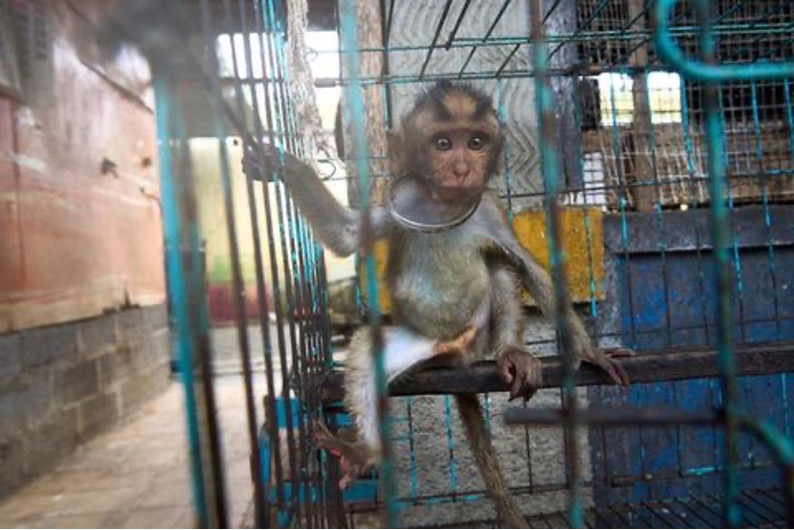
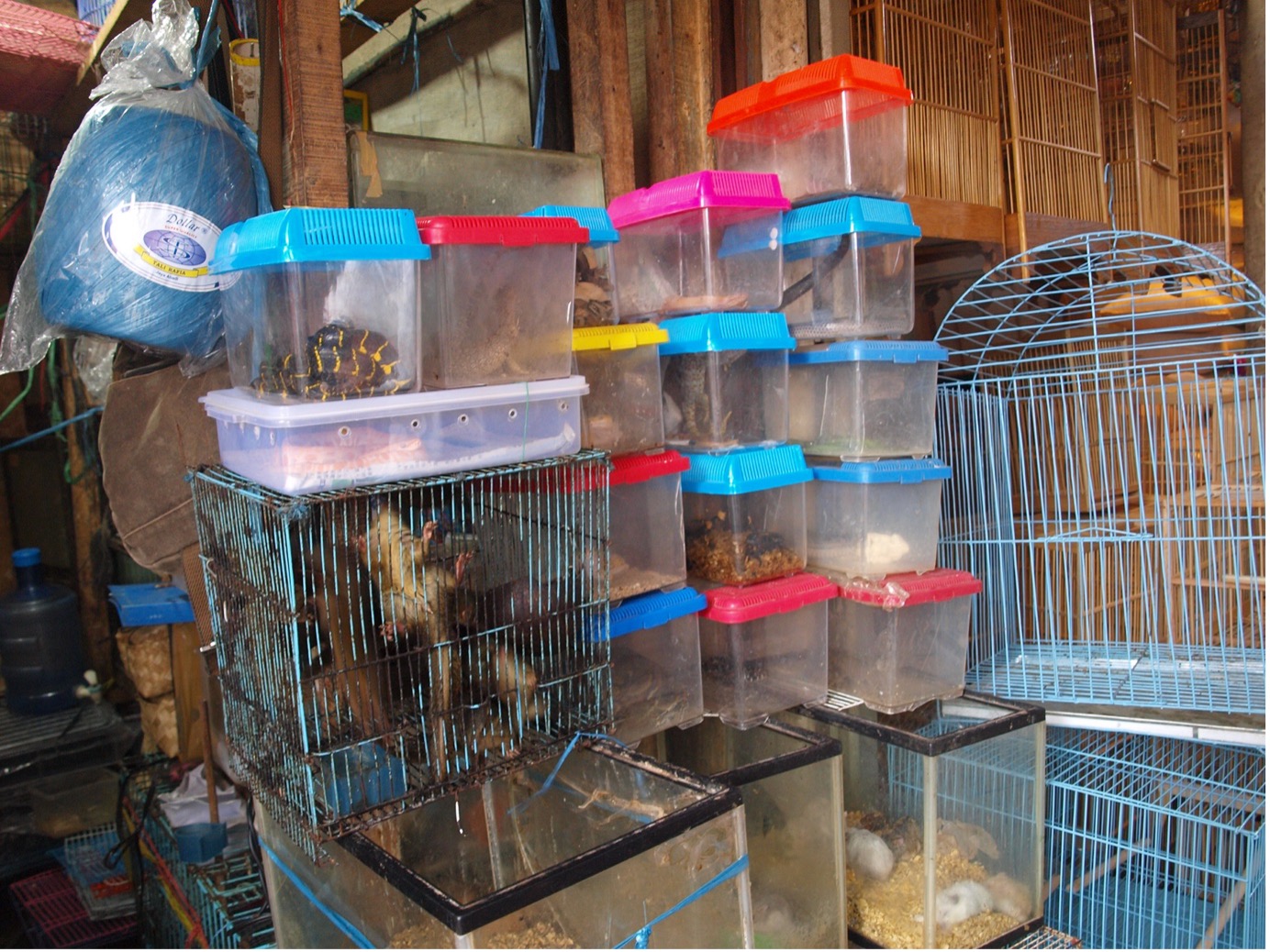
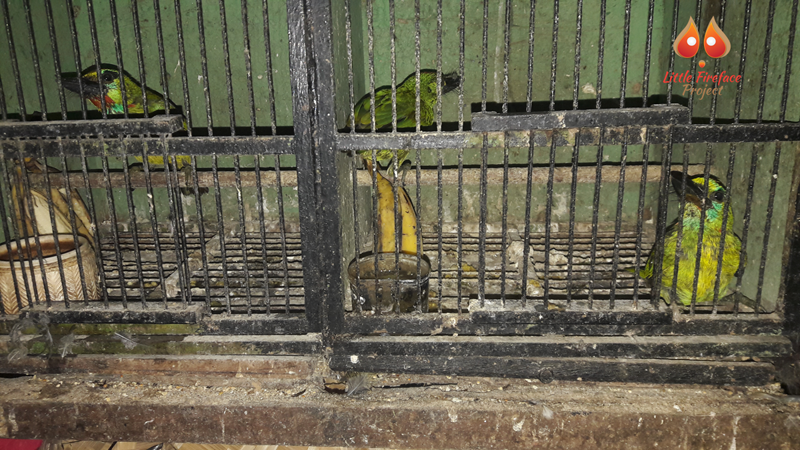
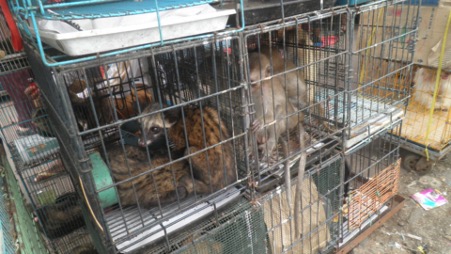
During monthly market surveys, the Little Fireface Project team monitors wildlife trade in some of Indonesia’s most notorious illegal markets, in the hopes that things will get better, and those breaking the law will be prosecuted. Sadly, the number of lorises we see for sale just is not decreasing. Indonesia has some of the best laws in Asia to protect their wildlife but sadly, as these photos in a public market show, they are not always enforced.

Part of our programme is thus also to work with international organisations like TRAFFIC to provide training materials so that enforcement officers can be sure they can identify the species that are being traded, so there is no doubt which are protected. Of course, the animal welfare issues of the unprotected species is also abysmal and is an issue in its own right, as the photographs of the baby monkeys show.

Please sign our petition to help end this cruel and crushing trade.