Experts gather to tackle slow loris trade – Press Release

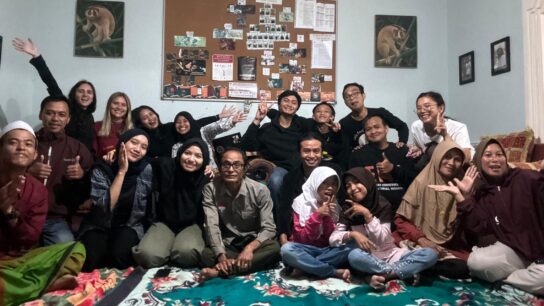
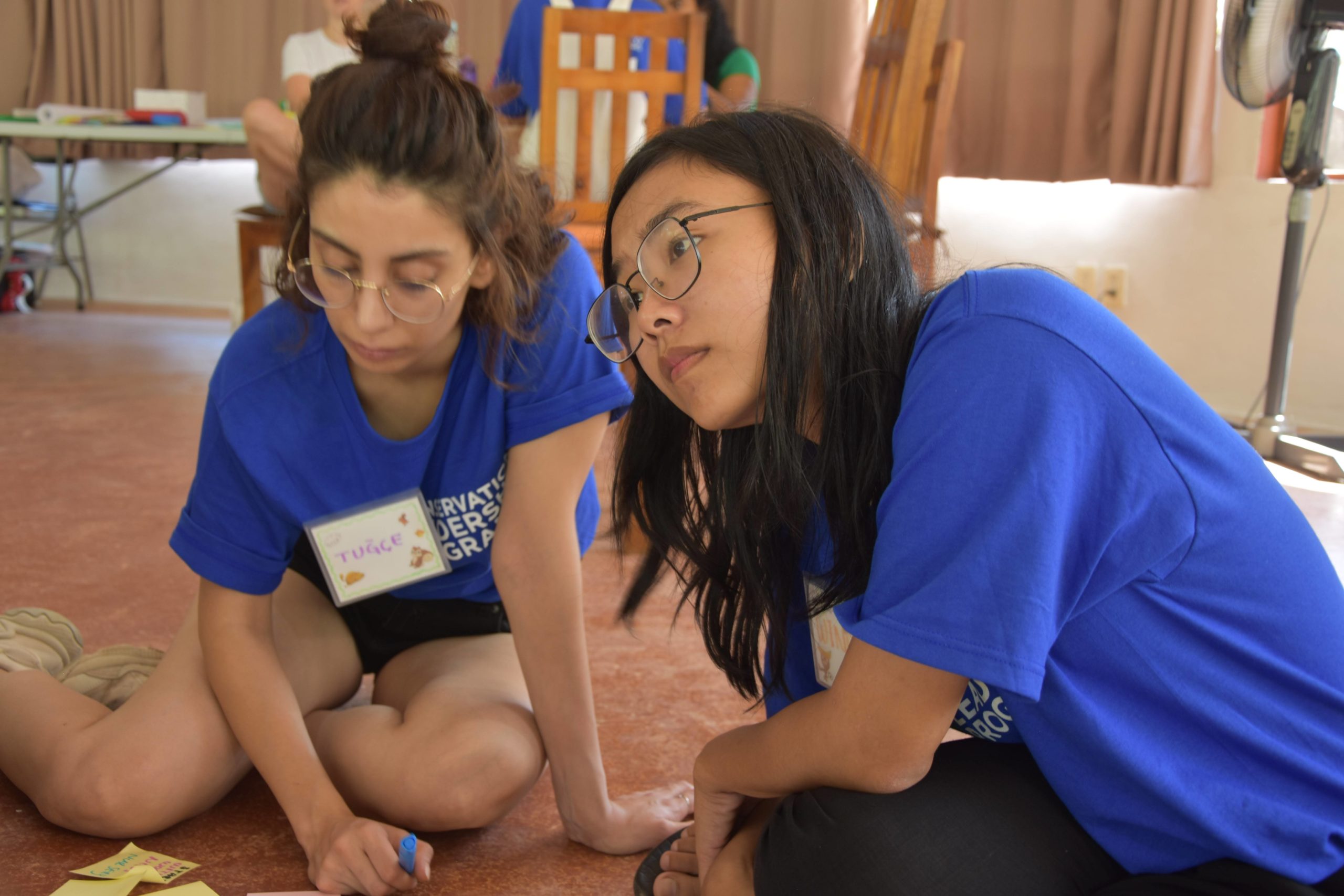
Sukabumi – last week over 50 people from government agencies, national and international universities, NGOs and rescue centres met in the Cikananga Wildlife Rescue Centre on Java, Indonesia, to discuss the challenges in tackling wildlife trade in Indonesia. Different from other such workshops the focus was on some of the lesser known nocturnal species with a particular emphasis on slow lorises.

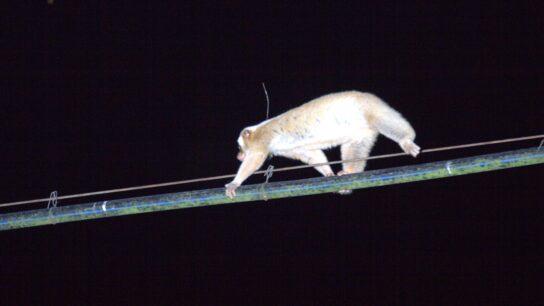
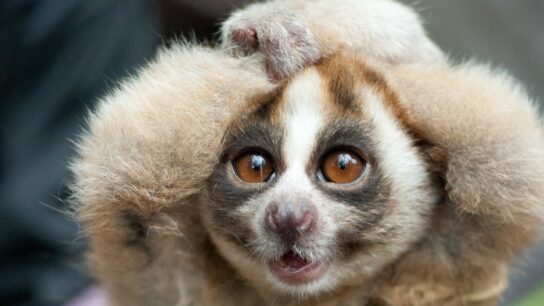
Slow lorises are a group of small nocturnal primates that are particularly heavily affected by the illegal pet trade. They occur all over Southeast Asia from India and China south to Indonesia and the Philippines.  Indonesia is home to six of the eight species including the recently described Kayan slow loris.

Anna Nekaris, professor in primate conservation at Oxford Brookes University, who described the new Kayan slow loris, presented the results of her research highlighting the differences between the species. This allows workshop participants to identify the different species they encounter in their day-to-day jobs. She remarked that “the increased diversity that is recognised amongst nocturnal mammals such as the slow lorises make it paramount that law enforcement agencies are able to identify the different species. With increased species numbers it furthermore highlights the need for increased protection of these sometimes overlooked animals”.

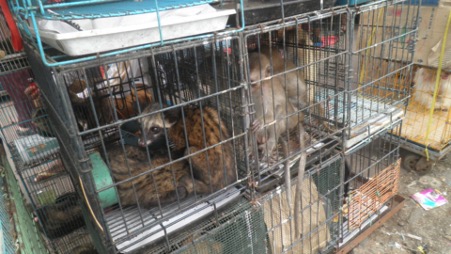
The participants were presented with data on the trade in civets, tarsiers, slow lorises and other wildlife demonstrating the global significance of Indonesia of the trade in these species. This resulted in frank discussions about the challenges the Indonesian government faces when confronted with large scale open trade in protected species. The participant then had the opportunity to view a great number of confiscated animals in the rescue centre. Several then went on to survey the animal markets in Jakarta observing no less than 31 slow lorises offered openly for sale.

Dr Chris Shepherd, deputy director of Traffic Southeast Asia was one of the speakers, and remarked how slow loris trade is actually worsening.

At the end of the workshop it was concluded that there was a clear need for a Southeast Asian wide slow loris conservation action plan as well as an increased understanding of the forces behind the open trade in protected wildlife at more regional scales.

Prof Nekaris concluded “It is inspiring to see that the conservation crises that the faces the slow loris brought together participants from different countries and varying backgrounds to safe an animal that has previously been considered insignificant.”


Note to editors:

Slow lorises (genus Nycticebus) are a group of 8 nocturnal primates that are threatened by habitat destruction and increasingly by trade – they feature frequently in YouTube videos. Slow lorises are protected in all of the 13 range countries in which they occur and are included on Appendix I of the Convention of International Trade in Endangered Species of Wild Fauna and Flora, precluding all international trade.


A film showing the nature of the wildlife trade in Indonesia can be seen here


Workshop Proyek Muka Geni: Perlindungan, Perdagangan, dan Pemberdayaan

From the 14th to the 16th January, the Little Fireface Project will hold a first in a series of 2013 workshops to help stop the wildlife trade in slow lorises. The event will be held at the Cikananga Wildlife Rescue Centre near Sukabumi, West Java in association with PPSC and TRAFFIC. Ultimate aims of the workshop include the first working group in Indonesia to work together to help enforce wildlife trafficking laws for slow loris, to help design a campaign to discourage keeping lorises as pets, and to improve captive care and release protocols for slow lorises.

International team discovers new loris species in Borneo and the Philippines

Although this news should have been released on the 14th of December, the embargo was leaked, so it seems timely that the Little Fireface Project should report on this important news now!

Discovered! New Species of Borneo’s Enigmatic Primate with a Toxic Bite

Three New Species of the Masked Slow Loris are Newly Recognized

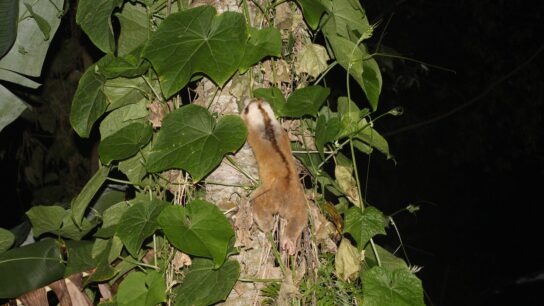
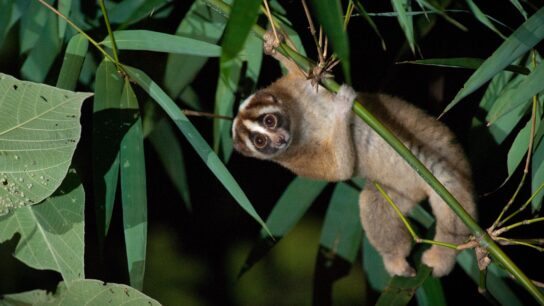
The images above show N. menegensis and N. kayan, photographed by Chi’en Lee

An international team of scientists studying the elusive nocturnal primate the slow loris in the jungles of Borneo have discovered three new species. Published in the American Journal of Primatology, the team’s analysis of the primate’s distinctive facial fur markings revealed the existence of one entirely new species, while three species others are being officially recognized as unique.

“Technological advances have improved our knowledge about the diversity of several nocturnal mammals,” said Rachel Munds, Little Fireface Team Member from the University of Missouri Columbia. “Historically many species went unrecognized. While the number of recognized primate species has doubled in the past 25 years some nocturnal species remain hidden to science.”

The slow loris (Nycticebus) is a primate genus closely related to galagos. These primates are nocturnal and can be found across South East Asia, from Bangladesh to China to the island of Borneo. The slow loris is rare amongst primates for having a toxic bite, and is listed as Vulnerable or Endangered on the IUCN Red List.

Slow lorises are recognized by their unique fur colouration on the body and face. While traits such as fur patterns are often used to distinguish between species, nocturnal species are cryptic in colouration and have less obvious external differences. The team’s research focused on the distinctive colourings of Borneo’s slow loris, whose faces have an appearance of a mask, with the eyes being covered by distinct patches and their heads having varying shapes of caps on the top.

Differences among these face masks resulted in recognition of four species of Bornean and Philippine lorises, N menagensis, N. bancanus, N. borneanus and N. kayan. Of these Nycticebus kayan is a new group unrecognised before as distinct. This new species is found in the central-east highland area of Borneo and is named for a major river flowing in its region, the Kayan.

The recognition of these new species strongly suggests that there is more diversity yet to be discovered amongst slow lorises throughout their range. Yet in Borneo and the Philippines itself, the area is threatened by human activity so the possibility that more slow loris species exist in small and fragile fragments, raising urgent questions for conservation. “The pet trade is a serious threat for slow lorises in Indonesia, and recognition of these new species raises issues regarding where to release confiscated Bornean slow lorises, as recognition by non-experts can be difficult,” says Prof Nekaris.


———————————————————————————————————————–

This study is published in the American Journal of Primatology. To request a copy contact sciencenewsroom@wiley.com or +44 (0) 1243 770 375


Full Citation:

XX Wiley, December 2012, DOI: xxxx


Paper URL: http://doi.wiley.com/ XXXXXDOIXXXXX


Contact the Author: The authors can be contacted via:

Dr Rachael Munds, University of Missouri press office:

Tim Wall
573-882-3346
walltj@missouri.edu


Dr Susan Ford, Southern Illinois University

Ron Sievers

618 | 453.2813
rsievers@siu.edu


Prof A Nekaris, Oxford Brookes University

Matthew Butler

01865 484630

m.butler@brookes.ac.uk


About the Journal:

The objective of the American Journal of Primatology is to provide a forum for the exchange of ideas and findings among primatologists and to convey our increasing understanding of this order of animals to specialists and interested readers alike.


Journal URL: http://onlinelibrary.wiley.com/journal/10.1002/(ISSN)1098-234


Loris Sparkle for the Holiday Season

Thanks to you all for your generosity in helping us at the Little Fireface Project and making our first year as an official project so amazing. We have had songs, poems, logos, children’s books, posters, photographs, passion and time donated to help us help to save the slow loris! As a tiny token of thanks for those of you celebrating the December holidays, here are some cute little gift tags and ornaments you can download to help spread a bit more loris awareness.

Frontier Earth and the Jungle Gremlins

Java’s jungle gremlins will feature as second in the series of Animal Planet’s landmark series Frontier Earth Presented by Walmart, with series presenter, carnivore expert Dave Salmoni.We will live tweet during the film, #frontierearth, #junglegremlin, #slowloris.

If you were inspired by what you saw in the film, and want to do more, please visit our Help the Loris pages, donate to our project from North America via the fantastic International Primate Protection League, or directly to our UK-based slow loris fund,  visit the slow lorises at one of the zoos in North America supporting the Little Fireface Project and Anna’s work – these are Cleveland Metroparks Zoo, Columbus Zoo, and the Brookfield Zoo, sign our petition to help close down the markets you saw in the film, join us on Facebook, or @queenfireface on Twitter. Please help us to save Asia’s Jungle Gremlins!


Animal Market Horrors

During monthly market surveys, the Little Fireface Project team monitors wildlife trade in some of Indonesia’s most notorious illegal markets, in the hopes that things will get better, and those breaking the law will be prosecuted. Sadly, the number of lorises we see for sale just is not decreasing. Indonesia has some of the best laws in Asia to protect their wildlife but sadly, as these photos in a public market show, they are not always enforced.

Part of our programme is thus also to work with international organisations like TRAFFIC to provide training materials so that enforcement officers can be sure they can identify the species that are being traded, so there is no doubt which are protected. Of course, the animal welfare issues of the unprotected species is also abysmal and is an issue in its own right, as the photographs of the baby monkeys show.

Please sign our petition to help end this cruel and crushing trade.

Living with the Gremlins

The Little Fireface Project team hopes to save the slow loris through studying their ecology, and inspiring people through education so that they gain empathy towards lorises, thereby empowering them to save them. This new video, produced and written by the team in Java, envelopes all those principles. Please watch and share. We hope that videos like this will one day overtake all those horrible videos of pet lorises that pervade YouTube and that people will appreciate the wild lorises and those people who are striving to save them.


But at least it still has teeth…

This week the ‘Slow Loris Eating Sticky Rice’ video has gone more viral than ever before. Somehow people think that this video is okay…the loris looks healthy. It looks cute. The ‘owner’ is taking ‘gentle care’ of the loris and ‘at least she has teeth.’ And oh…it looks like this owner has gotten his loris legally from a pet shop in Japan – because he is telling other people on his video where they can buy a slow loris for about £1500. See above for photos of terrible conditions of lorises in Japanese pet shops.

We have already mentioned on this site all the reasons why most legal lorises are still NOT legal. Pet stores can serve as a front to sell those smuggled from the wild. If pet stores are lucky enough to breed, the PARENTS must have been legally imported under CITES. If the parents were smuggled, the loris is still illegal. The loris in the rice video is a Sunda slow loris of the type from Sumatra. This type is rarely in captivity and there is not even a stable breeding programme for it in zoos as it has since been separated into several species.

I  interviewed a Japanese pet shop owner and he told me that he may get a loris to breed every three years and that is very rare. I on the other hand worked with the Japanese Wildlife Conservation Society who was working against the horrific illegal traffic of slow lorises into Japan, and during a two-day workshop met with many people at zoos and rescue centres who house the confiscated animals that were destined to land into Japan’s illegal slow loris trade. See photos above of this workshop.

Lorises thrive on gum, nectar and insects. Eating rice is NOT a natural diet. Lorises are nocturnal. Living in the light is painful. Lorises are tree dwellers. Clinging to a fork is a sign of terrified stress. This video is NOT cute. This is a cruel reminder that some animals just happen to survive a trade where thousands perish.

Meet Pak Dendi!

Continuing our series of interviews with our fabulous team out in Cipaganti, Java, today we introduce you to Dendi Rustandi, a 34-year-old entrepreneur turned slow loris expert extraordinaire! Our Research Fellow Sisil Putri conducts the interview…

  1.  Tell me about your background staying in the Cipaganti village?

I was born and raised in Pengalengan (Bandung) in 1978. I move out to Cipaganti village following my grandmother after I finished my high school and I met my wife here; she’s local to Cipaganti and we decided to live here.

2. What do you like about living in Cipaganti village?

I love the village atmosphere, the cold weather, a lot of fresh vegetables you can get here easily, and how the people know each other so well and are so kind to each other.

3. What’s your impression on working for “Little Fireface Project”?

The project is challenging for me as I didn’t know how to communicate with English,  but  now I can understand English a little. Also I found a lot of interesting new experiences from the project and so happy I have known some “bule” (foreigners) from this project.

4. What is your favourite thing and the hardest thing from the project ?

My favourite is to see slow loris carry the baby with them and the baby is just clinging there; it was so sweet and so happy to see.

The hardest thing about the project is when we have to go through bushes and bamboos; it makes slow loris hard to find and hard to see.

5. Tell me what you think the impact on yourself of the difference before and after you joined the project?

Through the project I can now  say that I understand English a bit and get nice salary from the project and I understand about kukang behavior from the research. It is such an experience to work in this project and revealing my village secret of having slow loris in the area and I realize as local people, we need to save them.

Before I know what kukang is and what they do, for me and family they are a very scary animal because I heard there were some people in our village who got bitten by kukang, which made them have treatment in the hospital. But after I work in this project and I know kukang better, I know understand what is kukang and their behaviour. I also get bitten by kukang from handling, but thank God that it was just okay by wearing gloves and I didn’t need to go to the hospital. From this project I become to love to join the research every night to see these cute and rare animal.